A growing Middle Class is vital for Uganda’s Sustainable Development


Since 1986 under the Museveni government Uganda has witnessed steady economic transformation and growth.  However, a critical question is if this has resulted into a sufficiently broad and geographically balanced middle class? Unlike her East African neighbours—particularly Kenya and Tanzania—Uganda has endured a protracted history of conflict since indipendence that repeatedly derailed its development. But as development economist Paul Collier has shown in his research on conflict-affected regions, there is a connection to the presence or lack of a bouyant middle class. People who lack economic opportunities, see little hope of improving their circumstances, and have limited confidence in public institutions and ultimately become more susceptible to recruitment into armed movements, political violence, and insurgencies. With a growing middle class, that risk is reduced.

A good example is Uganda’s neighbour, the Democratic Republic of Congo. The lack of a strong independent business and professional class, and institutions capable of protecting citizens and their economic interests, has left her derailed with unending civil conflicts- including an apparent inability to timely arrest economically devastating pestilences like Ebola. According to the 2024 household survey, 69% of the Congolese population lives below the national poverty line.

On the contrary, Kenya’s experience after the 2007–2008 post-election violence offers a useful comparison. Although the country experienced serious violence, it avoided full-scale civil war. The middle class played a significant role in that outcome. Business and civic leaders from all sectors initiated discreet negotiations between representatives of contesting Mwai Kibaki and Raila Odinga camps. Those talks culminated in the National Accord of 28 February 2008, which established a power-sharing government.

For Uganda, sustained development rests on stability. When the middle class expands, it creates a larger and more influential group of citizens who have a vested interest in economic and political stability. But with a weak middle class then few have concrete stake in the nation’s future.

The latest World Bank classification assigns Uganda as a low income nation, meaning it has not converted her progress into a sufficiently broad, financially secure and geographically balanced middle class. More so, those that have reaped from these 40- year gains seem to be increasingly inward looking other than intent on creating conditions for the class to expand. And, if current economic conditions persist affecting the expansion of this class, the risk that economic grievances could escalate into violence will only grow- and ultimately wipe out even the little this class has reaped!

  • Assoc Prof Martin M. Lwanga

Surviving and Thriving in the Age of the AI Revolution

I was recently discussing the impact of AI with some friends. This conversation came on the heels of watching Microsoft lay off a third of its staff, alongside news that an associate company in Africa had also laid off 500 employees. In other words, AI is officially here—slowly but surely reshaping our world.

In response to these concerns, one of my friends noted that the importance of people, leadership, and networking skills has never been greater than it is in this AI era. Things we ordinarily didn’t pay much attention to will now become everything. For example, old boys’ (OB) reunions, fundraising marathons, and face-to-face church or mosque gatherings have become priceless in helping build secure, meaningful connections.

In the era of AI, human connection and relationship-building will be the most critical leadership traits. Yes, AI can offer complex analysis and execute many tasks incredibly fast. But how does a machine negotiate, obtain buy-in, collaborate, syndicate, mobilize resources, implement strategy, resolve conflicts, establish joint ventures, or seek equity investors? AI can help you identify many of these important factors and leads, but it takes a human to close a deal. AI can give you all the data you need at your fingertips, but without people, negotiation, and selling skills, one will struggle to secure investor finance.

In other words, human connection remains at the center of all enterprise undertaking. A deal has to be closed in person; there needs to be a face to remain accountable, rather than just a number coming through a screaming algorithm.

The interesting thing is that you won’t typically find these concepts taught in a university course. Most schools are wired to turn out “hard” skills, not “soft|” skills. Yet, what is clear is that the time has come not just to harp on machines, but to figure out how we make machines subservient to us through human connection.

Those who figure this out will be the ones to survive and flourish. A hotel can hire humanoids to take over its kitchen and customer service, but people will still need to experience the genuine human touch. A resort can use AI to get clients but without that exotic human experience they will look for another pleasure resort. A firm may win clients through AI leads but retention would demand a human touch. That is the vital element—and your ultimate survival strategy.

Surviving as an Outside Manager

Imagine you are appointed to head a well-settled team. It has forged a close bond over the years of working together, but the organization brings you over as the new team leader. It could be either as the CEO, at a Director position, or mid-level manager. How would you manage that situation?

Very often, organizations go out to seek somebody from the outside to lead at the top or mid-level. There are a number of drivers. The organization might be slackening with a feeling that it needs new blood. There could also be a sense that it lacks the required talent and an outside manager is the solution. Sometimes, it is also internal politics that drive organizations to seek outsiders when they fail to agree on one person from within.

Yet, how this plays out is another thing. You might come in, and everyone, of course, extends their hand, but inward, they are steaming. “Let’s wait and see.” They are waiting to see you fail, after all, you took a coveted position which someone felt they had a right to. In such scenarios, even former enemies can suddenly become close business associates, with you now as the adversary.

United and with a new focus, the team can coalesce and easily play you. They can quietly plot to mislead you or fail to warn you of certain gaps—which they would later bring up as an accusation of failing to adhere to policy just to shame you. More so, the team can network with higher powers with which they have a closer relation than you, the intruder in their turf.

Caught in such a situation, there are a few tips. First, scan the environment and identify the power centers. Not everyone will have the same power and influence, and it helps to know who are most likely to cause you issues. Having identified them, develop strategies to disarm them, bring them closer to you, or learn how to avoid their booby traps.

Then never sign off on any decision without the full agreement of all important stakeholders on the team. The defiant team would wish to get you into trouble, and one way is to let you make a decision which they all seem to agree with. But once you start implementing it, they break away, creating a scenario where you are left alone. So it pays to have their firm consensus on any major decision.

Outside managers are often brought into organizations to change them. Yet, once they start, there is a tendency to resist. The outside manager should be careful. There is an old saying that some people do not know what they want. You are recruited as a change agent but the moment you start changing things, then all discover no wanted change afterall. And you the outsider are no longer the solution, but the problem.

So in any position as a new outsider manager tread with care!

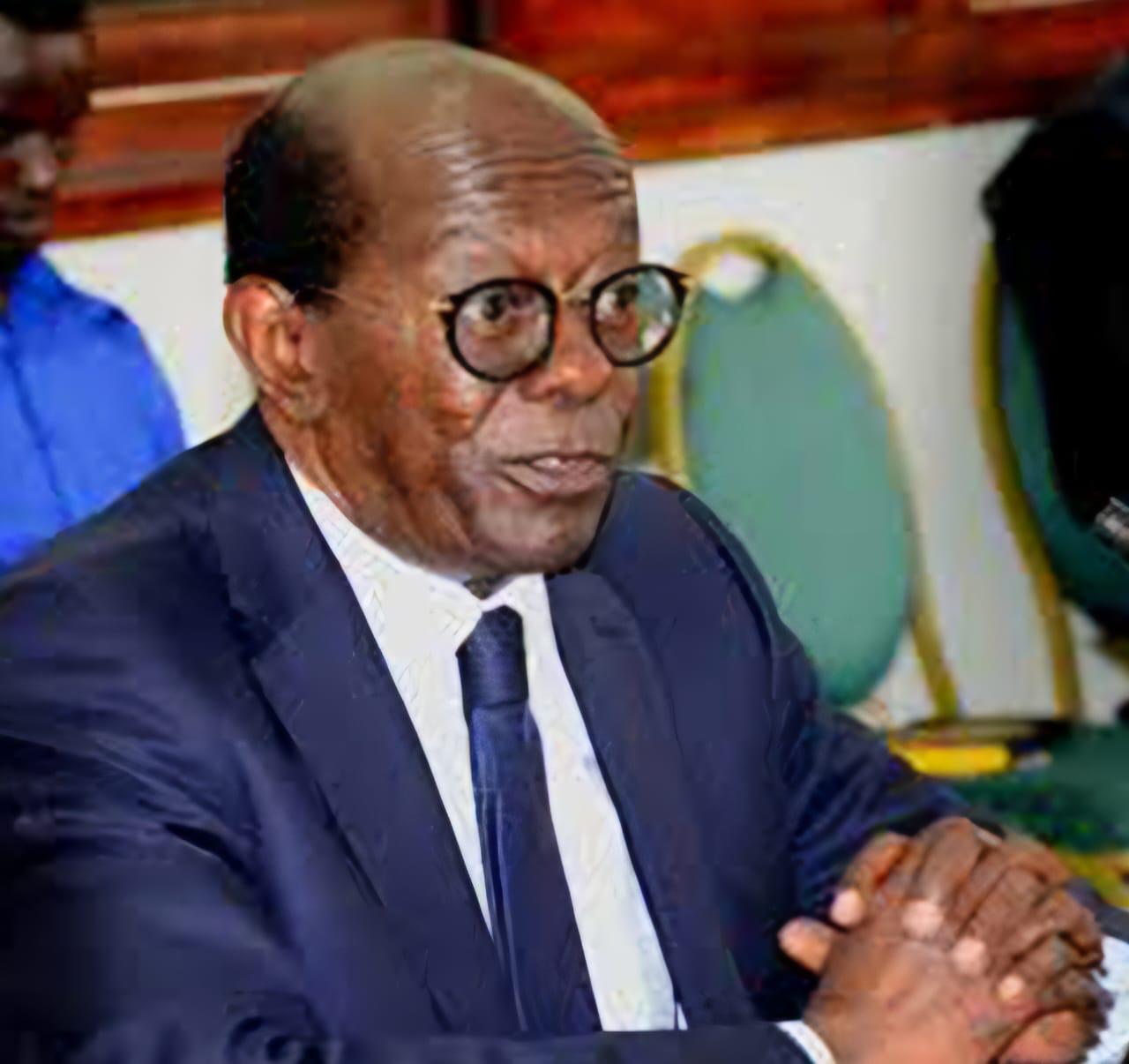
Peter Mulira (1941-2026): Uganda’s Legal Titan

The passing of Peter Mulira, a longstanding Rotarian and Senior Counsel, has left me deeply shaken. Peter was a gentleman and a scholar, reservoir of knowledge. I am not aware of anyone who possessed such a deep understanding of Buganda land matters, or indeed the constitutional history of Buganda, as he did. His knowledge of Uganda’s past was encyclopedic, enriched by his personal familiarity with many of the early figures who often visited his family home.

Peter was born into a politically active and historically significant family, the son of Eridadi Mulira and Rebecca Mulira (née Allen Namugenze). Rebecca was the daughter of Hamu Mukasa and sister to Victoria Nalwanga who sired Sarah Nalule, mother of the current Kabaka, Ronald Muwenda Mutebi II. Hamu Mukasa survived the 1886 religious persecutions and later served as secretary to Appolo Kagwa, accompanying him to the United Kingdom in 1902 for the coronation of King Edward VII.

Rebecca herself was a pioneer of the women’s movement in Uganda. She was among the founders of the Uganda Council of Women, which later gave rise to the YWCA Uganda, alongside notable figures such as Rhoda Kalema, Esseza Makumbi, Lilian Binaisa Mukwaya, Kate Kibuka, and Elizabeth Binaisa. She was also a founding member of the Pan African Women’s Organization and, in 1961, contested for a seat in the Buganda Lukiko.

Peter’s father, Eridadi, was equally distinguished. One of the first African teachers at King’s College Budo, he hailed from Koki royalty. A staunch anti-colonial activist, he was part of the Fabian movement while studying in England, alongside figures such as Kwame Nkrumah. He later founded the Progressive Party and the newspaper Uganda Empya, both of which advocated for independence. For his political activities, he was exiled to northern Uganda together with other nationalists, including Godfrey Binaisa. A prolific writer, he authored a Luganda-English dictionary and the children’s book Teefe, and later served as a Member of Parliament after independence.

Growing up in such a household, Peter witnessed at close range events that would shape Uganda’s history. Among them was the 1953 exile of Edward Mutesa II. His father played a key role in drafting the 1955 Namirembe Agreement that facilitated the Kabaka’s return. Peter would later share his interpretations of such pivotal moments with remarkable clarity, bringing to life the personalities who shaped Uganda’s path to independence. Though I did not always agree with his views—particularly his rather uncharitable assessment of my uncle, Godfrey Binaisa I chose to appreciate the depth of his perspective.

I came to know Peter relatively late in life, having first known his younger brother, Ham, during my time at Makerere. At Budo, Peter’s father had served as Chairman of the Board of Governors, part of a generation deeply committed to community service. Rebecca, ever active, remained a regular contributor to the New Vision, writing on political and social issues. She was a vivacious and engaging woman with a remarkable memory. Her sudden death in a motor accident in 2001 was a cruel end to an extraordinary life.

Despite the difference in our ages, Peter and I became close through Rotary, relating as though we were old friends. We often exchanged views on the major political and social issues of the day. Having once worked as a lawyer with the East African Community, he later established himself in private practice at the Diamond Trust Building, where he mentored a generation of lawyers who rose to prominence including the current Attorney General, Mr Kiryowa Kiwanuka, several Justices and Senior Counsels. In 2023, many of them organized a thanksgiving dinner in his honor, acknowledging his profound influence.

Following the passing of veteran politician Abu Mayanja in 2005, Peter took over his New Vision column, offering incisive commentary on law and politics, always rich in insight.

Peter’s contributions extended beyond the legal field. He was among the founders of Teefe Bank, Kampala Hospital (together with Professor Richard Kanyerezi), and served as a church warden at St. Stephen’s Church, Kisugu. He also served for many years as a cabinet minister in the Buganda Kingdom. He once confided in me his aspiration to serve as a Justice of the Supreme Court—a dream he felt had been thwarted—but he had come to terms with it and moved forward.

Like many who live full and complex lives, Peter was interpreted in different ways by different people. Some found him complicated. But to me, he was a principled man, steadfast in his beliefs within Rotary, we knew him as a stickler for rules—and deeply loyal to his friends. During the COVID-19 period, at his urging, we arranged for Rotary to honor his longtime friend, John Nagenda, for his literary contributions. Watching the two reminisce about their childhood in Mengo was a moment of pure joy.

Peter cared deeply for those close to him. He shared a strong, almost father-daughter bond with my successor as Rotary President, Susan Ajok (RIP), whose sudden passing affected him profoundly. He remained her steadfast supporter to the very end. When I secured an assignment in Tanzania, Peter quietly organized a farewell cake for me. When I discovered it was his doing and called to thank him, he was mildly annoyed that his surprise had been uncovered—but he went on to offer me thoughtful counsel I greatly valued.

A gentleman of the old world, Peter loved books, and his home was filled with classics from which he often quoted. I understand that in his younger days at Budo, he played a musical instrument and was also an accomplished cricketer. Even in later years, he remained physically active until his health declined.

The last time I saw him was on the steps of Namirembe Cathedral, during the funeral of his son a loss that understandably took a heavy toll on him. He was surprised to see me and greeted me with his familiar warm smile, though he appeared frail. I had hoped to visit him again and discuss preserving his many writings on Buganda’s land and constitutional history much like his father’s works, which are archived at Cambridge University—for future generations. Sadly, that opportunity never came.

With his passing, Uganda has lost a legal titan, who has left an indellible print on our constitutional history.

By Martin M. Lwanga